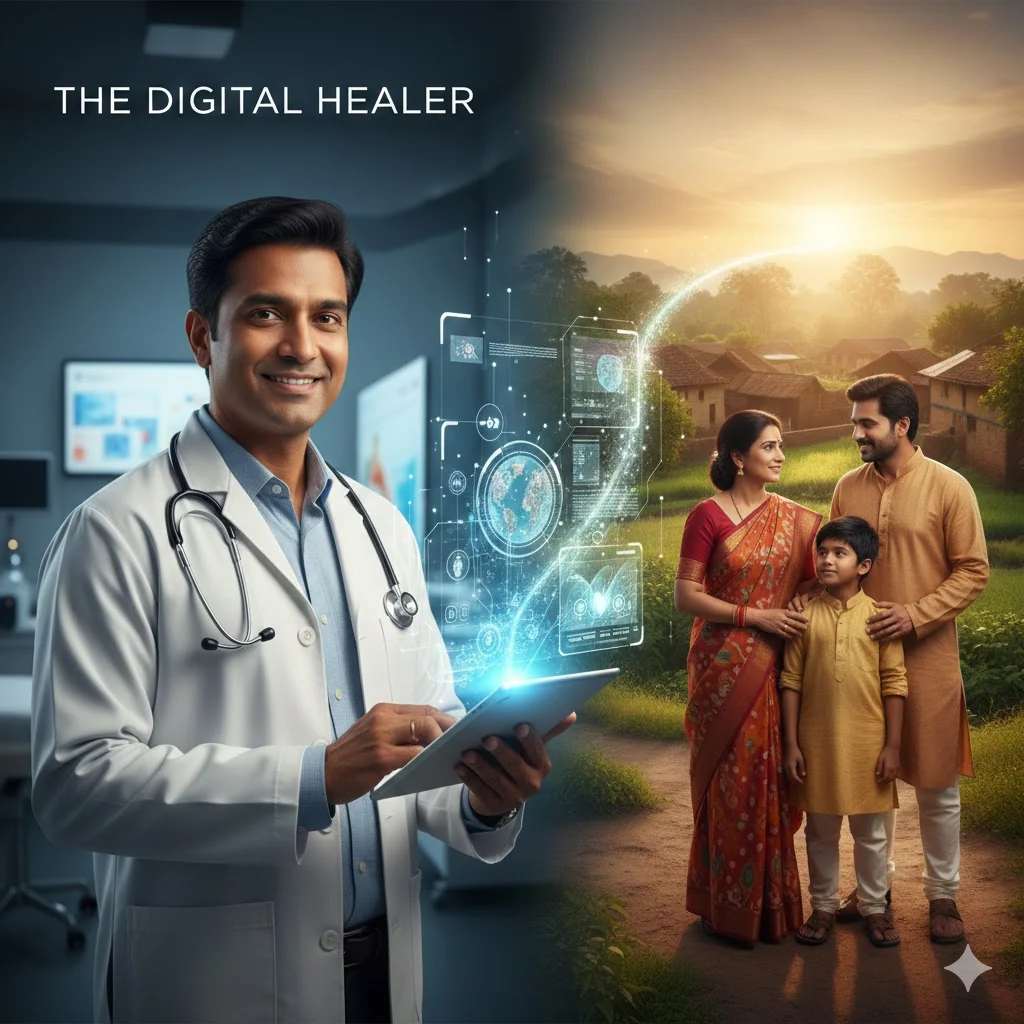
In our last discussion (Part-1), we talked about the "Future of Skin Care" and how computers are learning to help doctors. But for many of us living in smaller towns or villages, "Artificial Intelligence" (AI) sounds like something from a movie—something far away that doesn't affect our daily lives.
Today, I want to share a secret: The future isn't far away. It is already here in my clinic.
I am not just using AI because it is new; I am using it because it helps me see you better, treat you faster, and stay connected with you even if you live miles away. Let’s look at how we are using these "Digital Eyes" to keep your skin healthy.
1. The "Extra Set of Eyes" That Never Tires
Imagine you are walking through a dense forest at dusk. You might be a great guide, but wouldn't it be better if you had a powerful flashlight that could spot a tiny thorn on a leaf from 50 feet away?
In my clinic, AI is that flashlight.
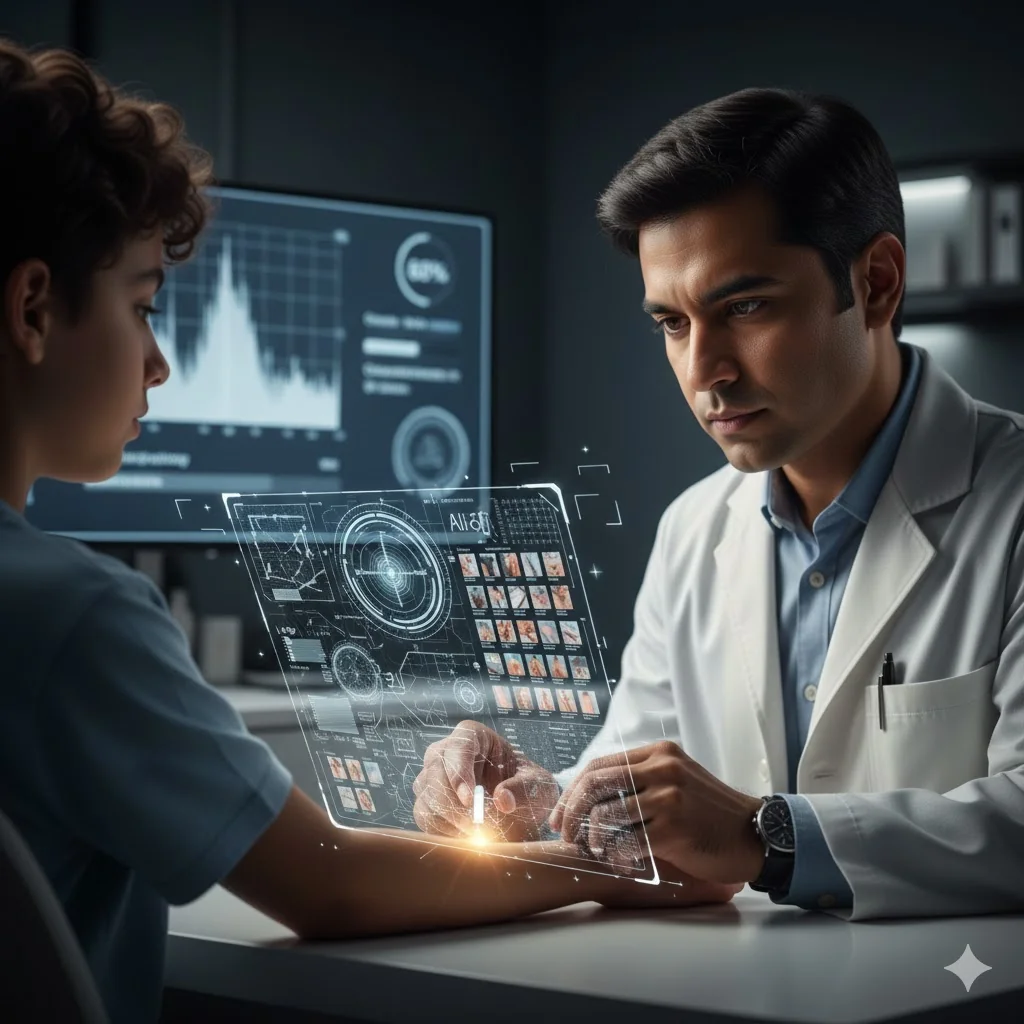
When I look at a rash, a mole, or a patch of dry skin, I use my years of medical training to understand what it is. But skin diseases are tricky—many of them look exactly the same to the human eye. By using AI-powered tools, I can compare your skin photo against millions of other cases from around the world in just one second.
-
How it helps the village: You don't have to wait for weeks or go to three different doctors to find out what is wrong. The AI helps me confirm the diagnosis immediately, so you can start the right medicine on day one.
2. Tracking Your Healing Like a Growing Crop
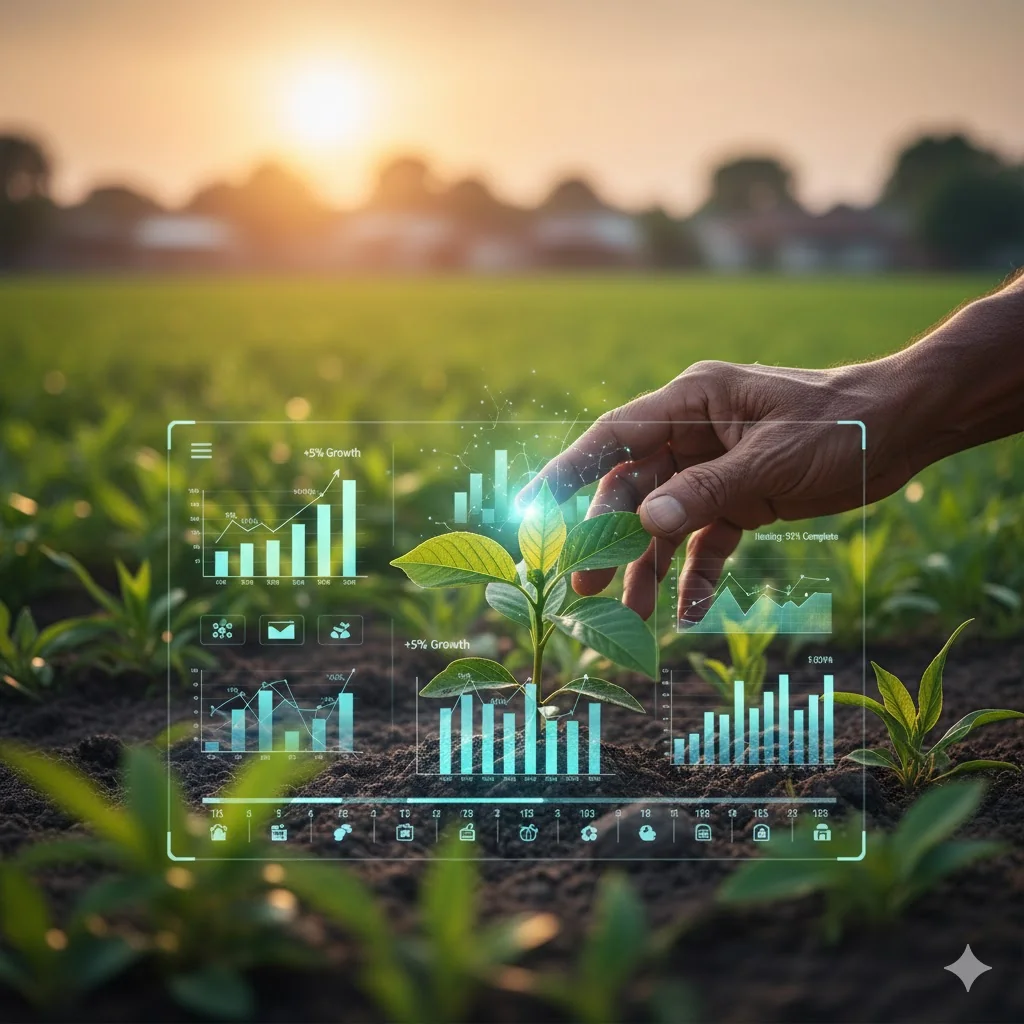
Farmers know that you can't just plant a seed and walk away; you have to watch it every day to see if it needs more water or if pests are attacking it.
Your skin is the same. When I give you a cream for eczema or psoriasis, we need to know: Is it actually working? Sometimes the change is so small that the human eye can't see it from one week to the next.
We use Smart Image Tracking. Every time you visit or send a photo, the AI measures the exact size, redness, and thickness of the skin patch.
-
The "Village" Way: It’s like marking a child’s height on a wall to see how much they’ve grown. Our AI marks the "height" of your recovery. If the redness has gone down by even 5%, the computer tells us. If it hasn't, we change your "skin recipe" immediately.
3. The "Doctor in Your Pocket": No Bus Needed
One of the biggest problems for my patients in rural areas is the journey. Catching a bus, losing a day of work, and traveling for hours just to show a small rash is difficult and expensive.
Through our AI-Enabled Teledermatology, your phone becomes a bridge to my clinic.
-
You take a photo of the problem using your smartphone.
-
Our system "triages" it. The AI looks at the photo and tells me, "Dr. Rohit, this patient has something urgent," or "This patient is doing fine with their current cream."
-
I review the results and send you a message or call you.
-
The Result: You only travel when it is absolutely necessary. For routine check-ups, the AI and I come to you, saving you time and money.
4. Personalized Care: Because No Two Skins are Alike
In a village, a tailor doesn't make one size of shirt for everyone; he measures your shoulders, your arms, and your height.
Standard medicine sometimes acts like a "one-size-fits-all" shirt. But AI allows me to be a Digital Tailor. The AI looks at:
-
Your age and skin type.
-
The weather in your village (Is it too dusty? Too humid?).
-
How your skin reacted to medicines in the past.
It then helps me suggest a specific routine that works for you. This is why two people with the same "itching" problem might get two different treatments at my clinic. We don't just treat the disease; we treat the person.
5. Catching the "Big Problems" Early
The most important job of AI is safety. Some skin marks look like simple moles but can actually be early signs of serious problems like skin cancer.
Our AI is trained to spot "irregular patterns" that even the most experienced human eyes might miss. By catching these tiny changes early, we can treat them with a simple cream or a small procedure before they become a big problem.
A Message from Dr. Rohit Gupta
Technology can be scary, but at its heart, it is just a tool—like a tractor for a farmer or a sewing machine for a tailor.
At my clinic, the computer doesn't make the decisions; I do. The AI is my assistant, helping me be more accurate, more available, and more focused on you. My goal is simple: to make sure that no matter where you live, you have access to the best skin care in the world.
Your skin is your body’s shield. Let’s use the best tools in the world to protect it.
What’s Next?
In Part 3 of this series, I will show you exactly how to take the "Perfect Skin Photo" at home so that our AI can give you the best results.