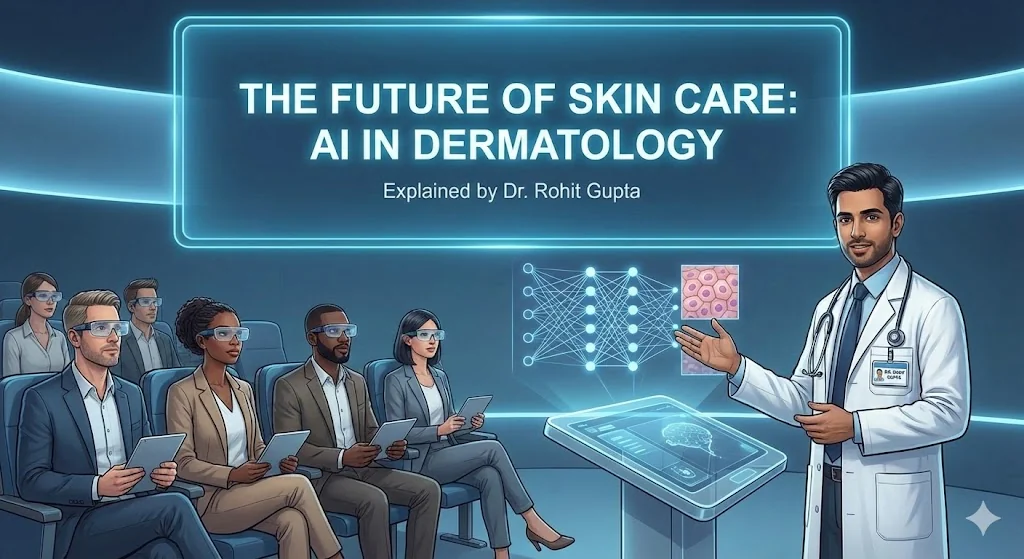
The Future of Skin Care is Here: Understanding AI in Dermatology
By Dr. Rohit Gupta Dermatologist | Birgunj, Nepal
Introduction: A New Era for Your Skin
Imagine a world where your skin doctor has a "super-assistant"—one that never sleeps, has memorized millions of medical textbooks, and can spot the tiniest change in a mole before the human eye can even squint.
That world isn’t science fiction. It is happening right now.
As a dermatologist practicing here in Birgunj, I have seen skin care evolve tremendously over the years. But nothing compares to the revolution we are witnessing today: Artificial Intelligence (AI).
Now, before you worry that a robot is going to start prescribing your creams, let me pause. AI isn't here to replace doctors. It is here to make us better. It is a tool that helps me, Dr. Rohit Gupta, provide you with safer, faster, and more accurate care.
In this guide, we are going to take a journey. We will look at how technology has changed, what AI actually does for your skin, and why this matters for you and your family here in Nepal. Whether you are struggling with acne, worried about a skin rash, or just curious about the future of health, this post is for you.
Part 1: The Evolution of Dermatology – From Magnifying Glasses to Algorithms
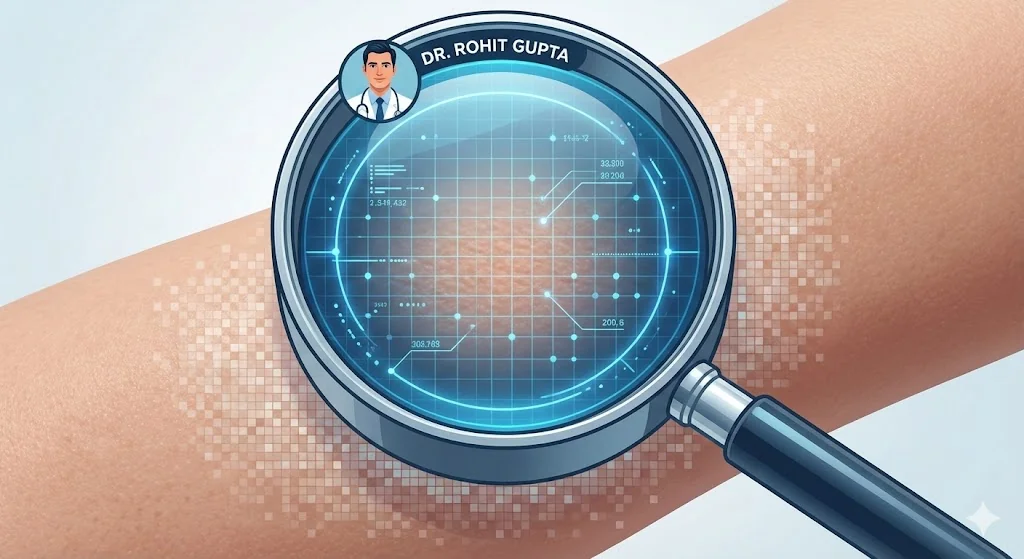
To understand where we are going, we have to look at where we came from. Dermatology has always been a "visual" specialty. For centuries, the dermatologist’s best tools were their eyes and a simple magnifying glass.
The Early Days
In the past, diagnosing a skin condition relied entirely on the experience of the doctor. If you had a rash, the doctor would look at it, compare it to mental notes from medical school, and perhaps flip through a physical textbook to find a matching picture. This worked well, but it had limits. It relied heavily on human memory and subjective opinion.
The Digital Turn
Then came cameras and digital records. We could take photos of your skin to track changes over time. This was a huge leap. If you came to my clinic in Birgunj with a mole, I could take a picture and compare it to how it looked six months ago. This practice, known as Teledermatology, began to bridge gaps, allowing doctors to consult on cases from miles away.
The AI Revolution
This is where we are now. We have moved from simply storing photos to understanding them.
Recent developments in computer science—specifically "Deep Learning"—have trained computers to "see" skin diseases. Think of it this way: A senior doctor might see 20,000 cases in their entire career. An AI system can be trained on millions of images in a few weeks. It learns to recognize patterns in pigmentation, texture, and redness that are mathematically impossible for a human to calculate alone.
Key Takeaway: We aren't just looking at your skin anymore; we are analyzing it with the power of millions of data points.
Part 2: What is AI in Dermatology? (In Simple English)
You hear the term "AI" everywhere, but what does it mean for your skin checkup at Shyama Pharmacy Clinic?
At its core, AI in dermatology is like a smart pattern-matching engine.
-
Image Analysis (Computer Vision): When we take a picture of a skin lesion, the AI breaks that image down into pixels. It measures the color, the border irregularity, and the size. It compares these measurements against a massive database of known skin conditions—from simple eczema to complex skin cancers.
-
Predictive Analytics: AI doesn't just look at what is there; it calculates probability. It can tell us, "There is a 95% chance this is just a benign mole, but a 5% chance it requires a biopsy." This helps in making safer decisions.
-
Personalized Treatment Plans: Every person's skin in Nepal is different. Our genetics, our diet, and even the pollution levels in Birgunj affect our skin. AI helps analyze these personal factors to suggest treatments that work best for you, rather than a "one-size-fits-all" approach.
Part 3: How AI is Changing the Game for Patients
Why should you, as a patient, care about this technology? Here are the real-world benefits.
1. Early Detection Saves Lives
The most critical application of AI is in detecting skin cancer, particularly Melanoma. Melanoma can be deadly if missed, but it is highly curable if caught early.
-
The AI Edge: Studies have shown that top-tier AI algorithms can now classify skin cancer with an accuracy comparable to board-certified dermatologists.
-
What this means for you: When you come for a screening, AI acts as a "second pair of eyes," reducing the chance that a suspicious spot is overlooked.
2. Faster Diagnosis for Common Conditions
Not everything is cancer. Most patients visit us for acne, psoriasis, eczema, or fungal infections (like Ringworm, which is common here).
-
The AI Edge: AI tools can rapidly sort through possibilities. Instead of trying three different creams to see what works, AI helps narrow down the exact type of acne or fungus you have, leading to the right medication sooner.
3. Accessibility in Remote Areas
Nepal has beautiful, rugged terrain, but that can make getting to a specialist difficult.
-
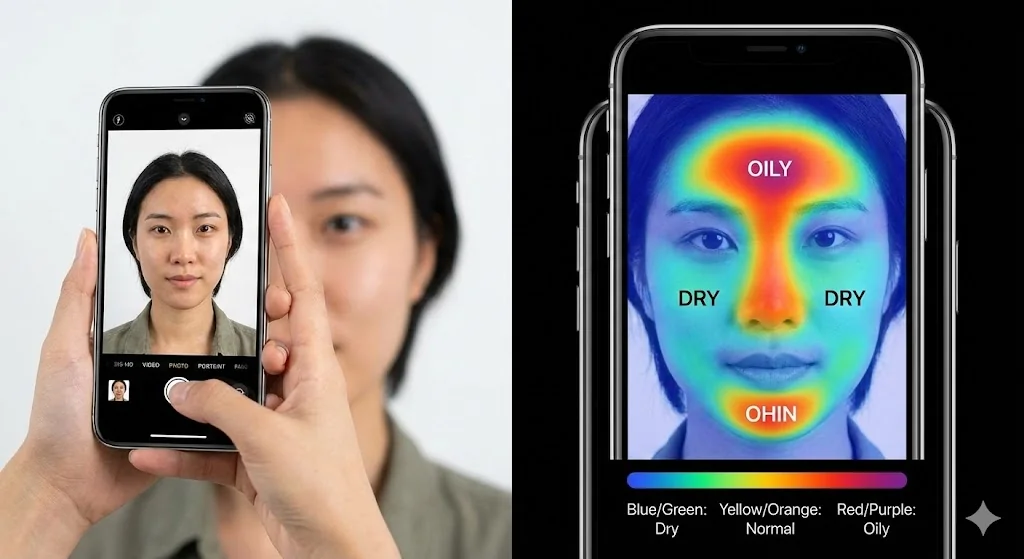
The AI Edge: With AI-powered mobile apps, a community health worker in a remote village could take a photo of a patient's rash. The app can offer a preliminary triage—telling them "This looks like a simple allergy" or "This looks serious, go to Birgunj immediately." It democratizes healthcare.
4. Better Cosmetic Results
For those interested in aesthetic treatments (like anti-aging or scar removal), AI is a game-changer.
-
The AI Edge: We can now use simulators to show you what you might look like after a treatment before we even start. It manages expectations and helps tailor procedures to your specific facial structure.
Part 4: The "Human in the Loop" – Why Doctors Still Matter
This is the most important section. I often get asked, "Dr. Rohit, will a robot take your job?"
The answer is a firm no.
AI is brilliant at processing data, but it lacks empathy, context, and judgment.
-
Context: An AI might see a red rash and call it dermatitis. But I, as your doctor, know that you just started a new medication for blood pressure, or that you've been stressed about a family wedding. That context changes the diagnosis completely.
-
Empathy: A machine cannot hold your hand when you are worried. It cannot explain a treatment plan in a way that eases your anxiety.
-
Complex Cases: Medicine is rarely black and white. Often, patients have two or three conditions overlapping. Humans are still far superior at navigating these "grey areas."
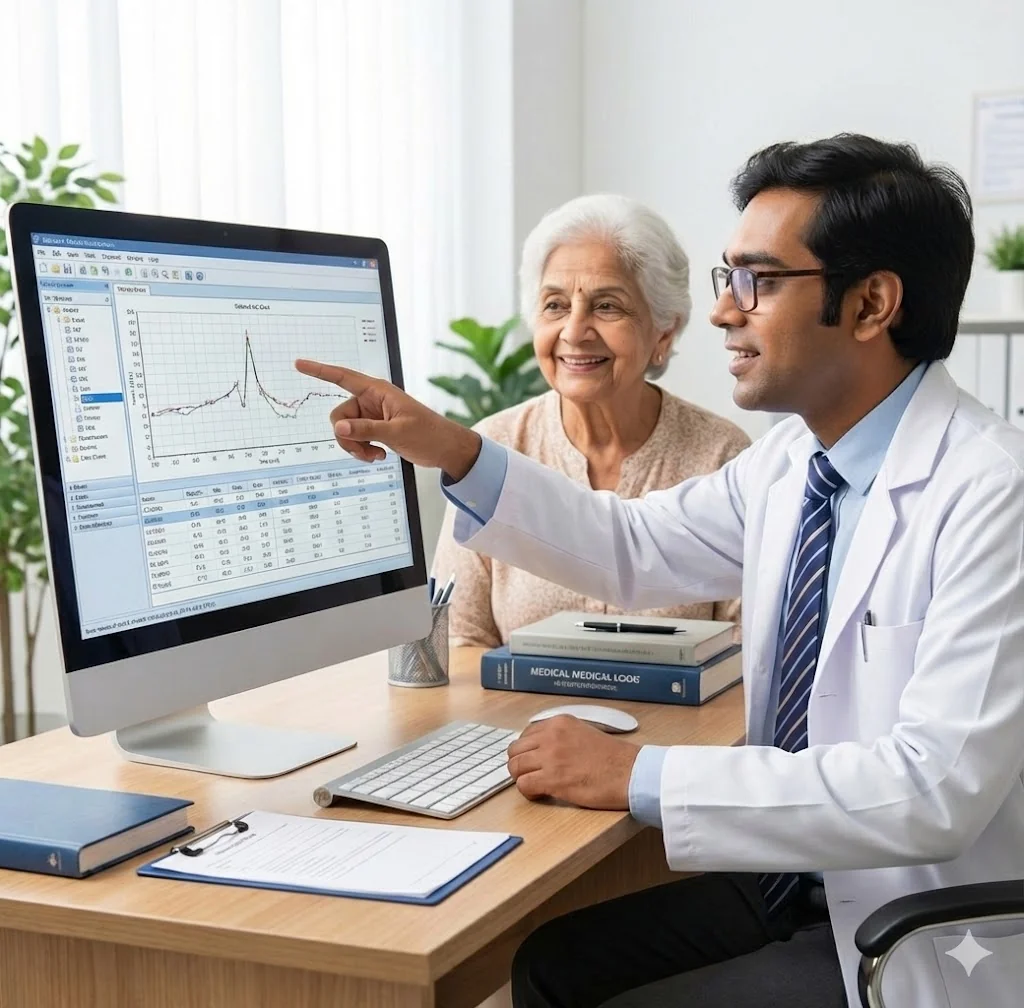
In my clinic, I use technology to handle the data so I can focus on you, the person.
"AI will not replace dermatologists. However, dermatologists who use AI will replace those who don't." — Adapted from a popular medical adage.
Part 5: Recent Evolutions & What the Research Says
For those who love science, let's look at what is happening at the cutting edge.
Deep Learning & Convolutional Neural Networks (CNNs): The biggest recent leap has been in CNNs. These are algorithms modeled after the human brain. A landmark paper published in Nature demonstrated that a CNN trained on nearly 130,000 clinical images performed on par with 21 board-certified dermatologists in classifying skin lesions.
Smartphone Integration: We are seeing a move from big hospital machines to handheld power. New apps are utilizing the high-resolution cameras on phones (like the iPhone or Pixel) to perform spectral analysis of the skin using just ambient light.
Notable Reads: If you are interested in reading more about this topic, I recommend these resources which discuss the intersection of AI and medicine:
-
Deep Medicine by Eric Topol – A fantastic book about how AI can make healthcare human again.
-
Articles from the Journal of the American Academy of Dermatology (JAAD) regularly feature updates on AI accuracy.
Part 6: Bringing Global Tech to Local Care in Birgunj
At Shyama Pharmacy Clinic, my goal is to blend traditional care with modern advancements.
Whether you are from Birgunj, or traveling from nearby areas, you deserve world-class diagnostic accuracy. By staying updated with these global trends in AI and technology, I ensure that our local treatments for conditions like Melasma, Fungal Infections, and Acne are based on the latest scientific standards.
We are not just treating spots; we are treating people. And now, we have the smartest tools in history to help us do it.
Conclusion: Your Skin Deserves the Best
Technology moves fast, but the goal of medicine remains the same: to help you live a healthy, confident life. AI is a powerful ally in that mission. It makes skin care more precise, more proactive, and more personalized than ever before.
If you have a mole you are worried about, a persistent rash, or just want a check-up to ensure your skin is healthy, don't leave it to guesswork. Let's combine the precision of science with the care of a specialist.
Ready for your check-up?
Dr. Rohit Gupta Dermatologist
Visit Us: Shyama Pharmacy Clinic Near Mahabir Sthan, Main Road Birgunj, Nepal