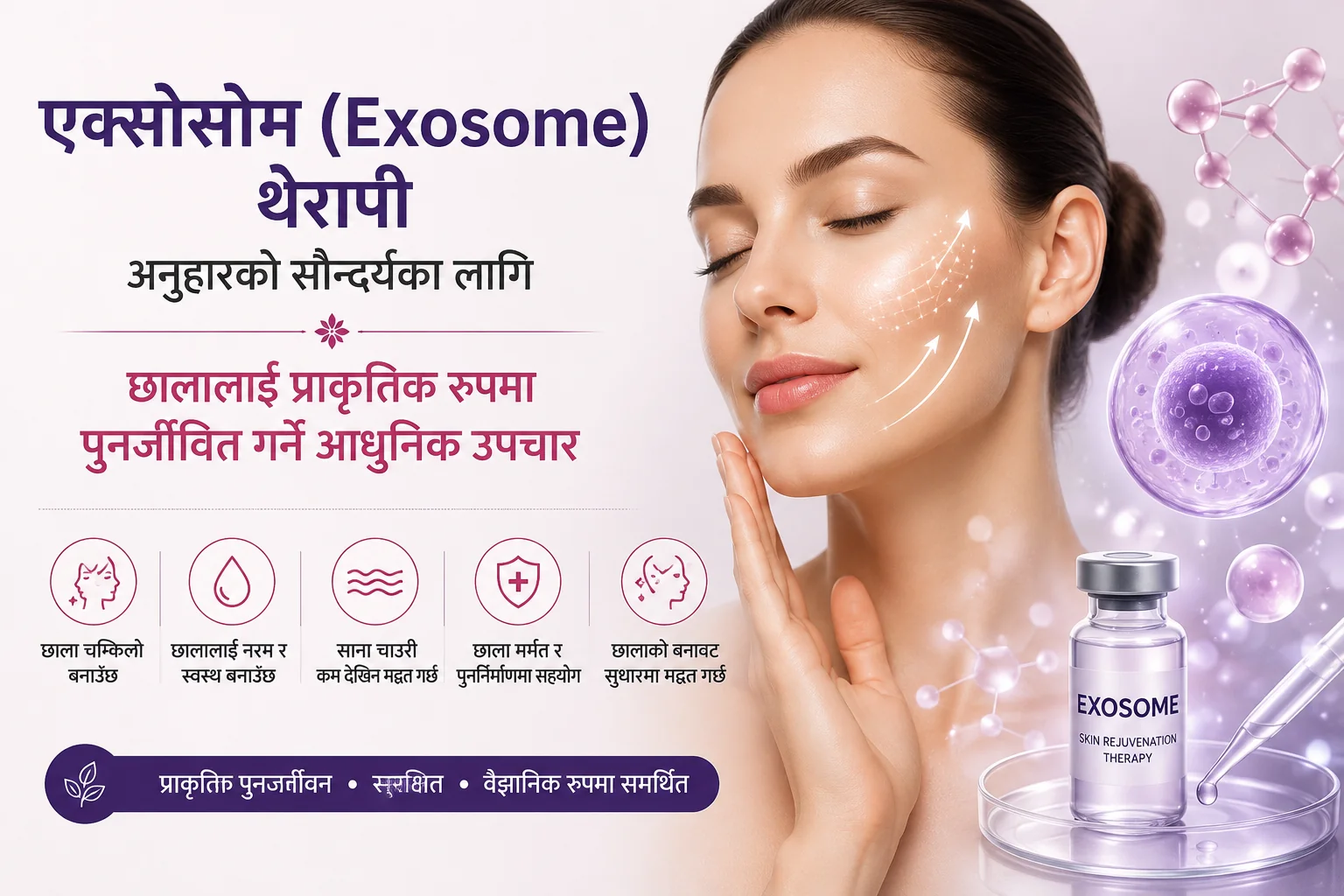
Advances in regenerative medicine have introduced several innovative treatments for skin rejuvenation, and exosome therapy is among the most promising. Rather than simply improving the appearance of the skin, exosomes are being studied for their ability to support the skin's natural repair and regeneration processes.
What Are Exosomes?
Exosomes are microscopic extracellular vesicles naturally released by cells. They contain proteins, lipids, growth factors, and genetic signaling molecules that help cells communicate with one another. In aesthetic dermatology, purified exosome-based products are used to promote skin repair and improve overall skin quality.
Unlike dermal fillers, exosomes do not add volume to the face. Instead, they aim to enhance the skin's natural healing and regenerative capacity.
How Do Exosomes Work?
Exosomes act as biological messengers. They help regulate communication between skin cells and may:
-
Support collagen and elastin production.
-
Improve skin hydration and elasticity.
-
Reduce inflammation.
-
Promote tissue repair.
-
Improve skin texture and radiance.
-
Support healing after aesthetic procedures.
Research in this field is expanding rapidly, although many cosmetic applications continue to be actively investigated.
Who Can Benefit?
Exosome therapy may be considered for individuals who wish to improve:
-
Fine lines and early wrinkles.
-
Dull or tired-looking skin.
-
Uneven skin texture.
-
Mild acne scars.
-
Enlarged pores.
-
Sun-damaged skin.
-
Skin recovery following laser treatments or microneedling.
How Is the Treatment Performed?
Depending on the product and treatment plan, exosomes are commonly applied after procedures such as microneedling or fractional laser therapy, allowing them to penetrate through controlled microchannels in the skin. Some protocols may also involve injection by trained clinicians, depending on the formulation and local regulatory approval.
The procedure generally takes 30–60 minutes and usually involves minimal downtime.
Is the Procedure Painful?
Most patients experience only mild discomfort. When combined with microneedling or laser procedures, a topical anesthetic cream is often applied before treatment.
How Many Sessions Are Needed?
Treatment protocols vary because exosome therapy is still evolving. Many practitioners recommend:
-
Three to four treatment sessions.
-
Sessions spaced approximately 3–4 weeks apart.
-
Maintenance treatments based on individual skin condition and clinical response.
Your dermatologist will determine the most appropriate schedule.
When Will Results Be Visible?
Many patients notice improvements in skin hydration and glow within several weeks. Improvements in skin texture and firmness generally develop gradually over the following months as collagen remodeling occurs.
Advantages of Exosome Therapy
-
Minimally invasive treatment.
-
Supports natural skin regeneration.
-
Minimal recovery time.
-
May enhance healing after aesthetic procedures.
-
Can be combined with treatments such as microneedling, fractional lasers, radiofrequency microneedling, and other dermatologist-directed skin rejuvenation procedures.
Possible Side Effects
Exosome therapy is generally well tolerated when high-quality products are used by qualified medical professionals. Temporary side effects may include:
-
Mild redness.
-
Swelling.
-
Tenderness.
-
Minor bruising (if injections are used).
-
Temporary skin sensitivity.
These effects usually resolve within a few days.
Aftercare
Following treatment, patients should:
-
Avoid makeup for 12–24 hours if advised.
-
Avoid strenuous exercise, hot baths, saunas, and swimming for 24–48 hours.
-
Apply sunscreen daily.
-
Keep the skin well moisturized.
-
Follow all instructions provided by the treating dermatologist.
Is Exosome Therapy Safe?
Exosome therapy is an exciting area of regenerative medicine, but product quality, manufacturing standards, and regulatory approval vary between countries. Patients should receive treatment only from qualified medical professionals using products that comply with applicable regulations.
Although early clinical studies are encouraging, additional high-quality research is still needed to establish long-term safety and effectiveness for many cosmetic indications.
Conclusion
Exosome therapy represents an exciting advancement in regenerative aesthetic dermatology. By supporting the skin's natural repair mechanisms, it offers the potential to improve skin quality, texture, and overall appearance. While scientific evidence continues to grow, exosome therapy should be viewed as an evolving treatment that is best performed by experienced dermatologists using carefully selected products. A personalized consultation remains essential to determine whether this treatment is appropriate for each individual.