Introduction
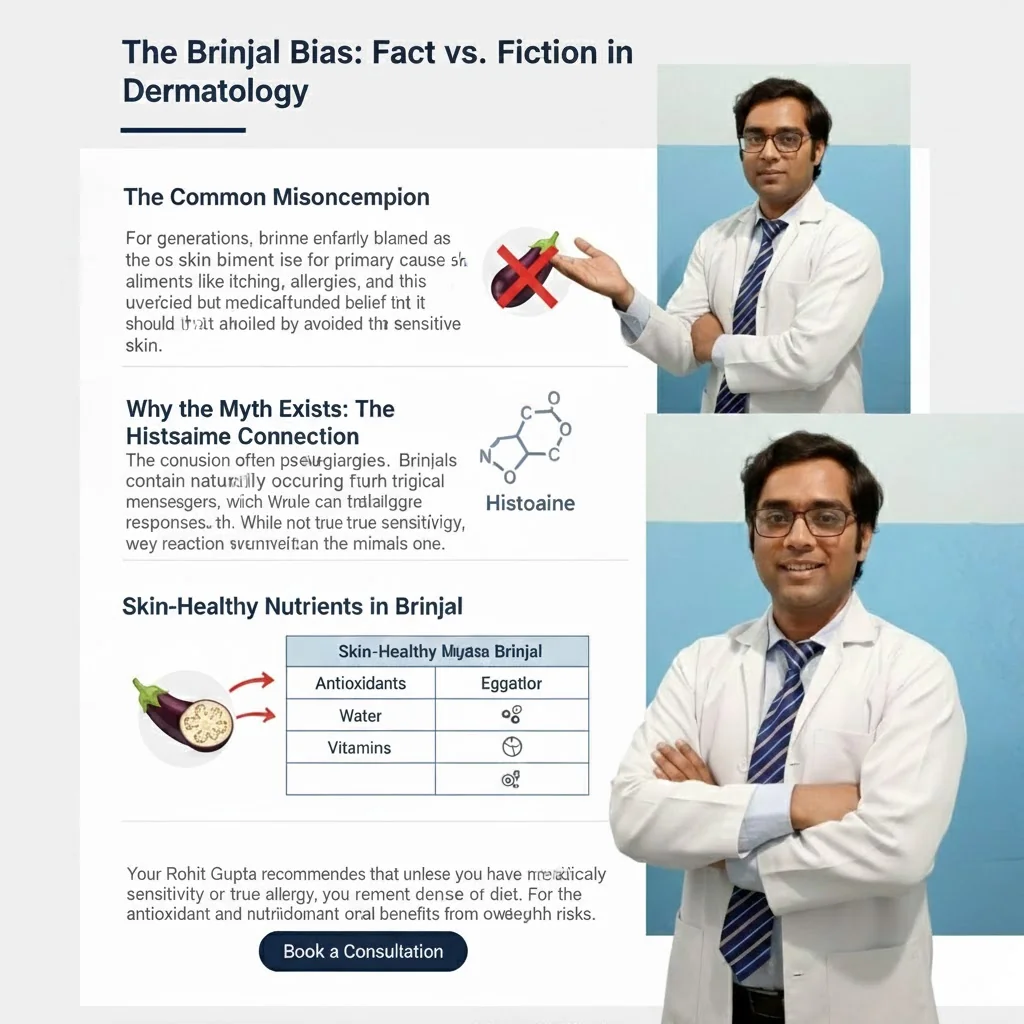
For generations, traditional medicine has celebrated eggplant (brinjal) as a skin-healing superfood, yet modern dermatology clinics frequently hear patients blame the same vegetable for triggering eczema flare-ups and acne breakouts. This contradiction creates confusion: Is brinjal truly beneficial for skin health, or should people with sensitive skin avoid it entirely? The answer lies in understanding the science behind histamines, salicylates, and a phenomenon called pseudo-allergies—concepts that bridge the gap between cultural wisdom and medical evidence.
Understanding Histamines and Salicylates in Eggplant
Eggplants contain naturally occurring compounds called histamines and salicylates, which are present in many plant-based foods. Histamines are chemical messengers in the body that regulate immune responses, inflammation, and skin reactions. Salicylates are naturally occurring plant compounds with anti-inflammatory properties. While both compounds offer health benefits, some individuals experience adverse reactions when consuming foods high in these substances.
The confusion arises because eggplant does contain measurable levels of these compounds. However, the presence of a substance does not automatically mean it will cause problems for everyone. This is where the concept of pseudo-allergies becomes crucial to understanding individual skin responses.
What Are Pseudo-Allergies? A Simple Explanation
Imagine your immune system as a security guard at a building. A true allergy occurs when the guard incorrectly identifies a harmless visitor (like peanut protein) as a genuine threat and triggers an alarm. A pseudo-allergy, by contrast, is when the guard overreacts to a legitimate but minor issue—like someone carrying a large bag—and sounds the alarm unnecessarily.
Pseudo-allergies to histamines and salicylates work similarly: Your body doesn't have a true allergic reaction (which involves specific antibodies), but rather an exaggerated sensitivity to these naturally occurring compounds. This sensitivity varies dramatically between individuals based on genetics, gut health, enzyme production, and overall immune system function.
People with conditions like histamine intolerance or salicylate sensitivity may experience skin reactions, digestive issues, or headaches after consuming eggplant. However, these reactions are not true allergies—they're oversensitivities that can often be managed through dietary modifications, enzyme supplementation, or gradual desensitization under professional guidance.
Why Eggplant Gets Wrongly Blamed for Skin Conditions
The association between eggplant and skin flare-ups typically occurs in individuals with pre-existing conditions like eczema or acne-prone skin. When someone experiences a flare-up after eating eggplant, they naturally assume causation. However, skin conditions are multifactorial—they result from genetics, stress levels, hormonal fluctuations, environmental factors, and overall diet quality.
Eggplant may be a contributing trigger for some individuals, but it's rarely the sole cause. Additionally, the nightshade family (to which eggplant belongs) has been unfairly vilified in popular health discourse, leading to unnecessary dietary restrictions that deprive people of nutritious foods.
The Nutritional Benefits of Brinjal for Skin Health
Despite concerns about histamines and salicylates, eggplant offers remarkable skin-supporting nutrients. The purple pigment comes from anthocyanins, particularly nasunin, which protects brain cell membranes and fights oxidative damage. Research shows that nasunin protects against oxidative damage during aging, making it valuable for anti-aging skincare.
Eggplant is also rich in fiber, vitamin B6, and manganese—all essential for healthy skin. Fiber supports digestive health, which directly impacts skin clarity. Vitamin B6 aids metabolism and immune function, while manganese supports wound healing and collagen formation. These nutrients work synergistically to promote skin health from within.
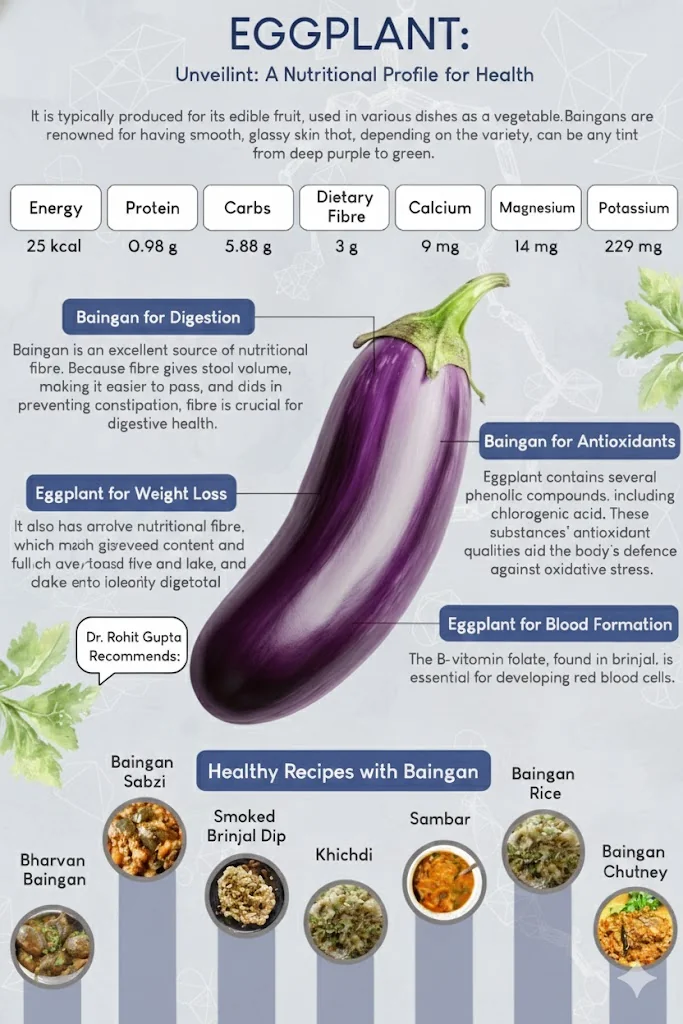
Nutritional Benefits Comparison Table
| Nutrient | Per 100g Raw Eggplant | Skin Health Benefit |
|---|---|---|
| Anthocyanins (Nasunin) | High concentration | Antioxidant protection, anti-aging, reduces oxidative stress |
| Dietary Fiber | 2-3g per cooked cup | Supports digestion, improves skin clarity |
| Vitamin C | 3.5mg per 100g | Antiviral, antibacterial, collagen synthesis |
| Vitamin B6 | 0.08mg per 100g | Metabolism, immune function, skin barrier support |
| Manganese | ~10% daily value per cup | Wound healing, collagen formation, bone health |
Practical Recommendations for Skin Health
For Those Without Sensitivities:
- Incorporate eggplant into your diet 2-3 times weekly for maximum antioxidant benefits
- Keep the skin on when cooking to maximize manganese and anthocyanin content
- Pair eggplant with healthy fats (olive oil) to enhance nutrient absorption
- Consider topical applications: minced eggplant can be applied as a face mask for antibacterial benefits
For Those With Suspected Sensitivities:
- Work with a dermatologist or nutritionist to identify actual triggers
- Keep a detailed food and skin reaction diary for 2-4 weeks
- Consider an elimination diet under professional supervision before avoiding eggplant permanently
- Explore enzyme supplements designed to break down histamines if sensitivity is confirmed
Conclusion
Brinjal represents a perfect example of how cultural wisdom and modern science can coexist. While eggplant does contain histamines and salicylates, these compounds are not inherently harmful—they're only problematic for individuals with specific sensitivities. For most people, the skin-supporting nutrients in eggplant far outweigh any potential risks.
Rather than following blanket dietary restrictions based on popular health trends, consult with a dermatologist to determine whether eggplant suits your individual skin health needs. The truth about brinjal and skin lies not in myth or fiction, but in personalized, evidence-based medicine.