Draft for clinical review: this educational text and illustration require clinician approval before publication.
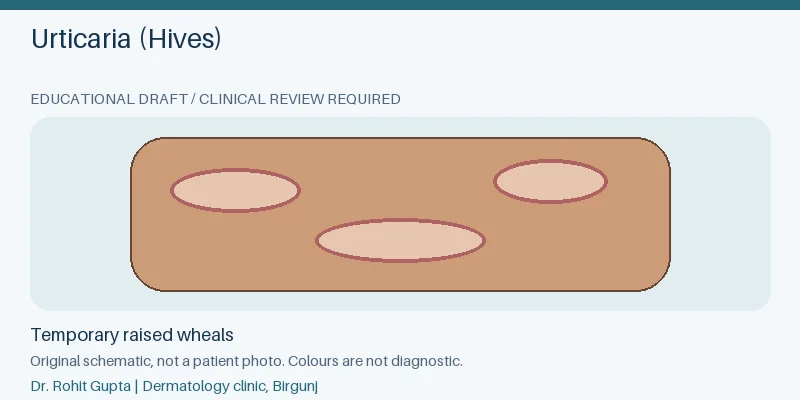
Image: Temporary raised wheals. Original schematic illustration, not a patient photograph. Colours and shapes are simplified and are not diagnostic.
Understanding Urticaria (Hives)
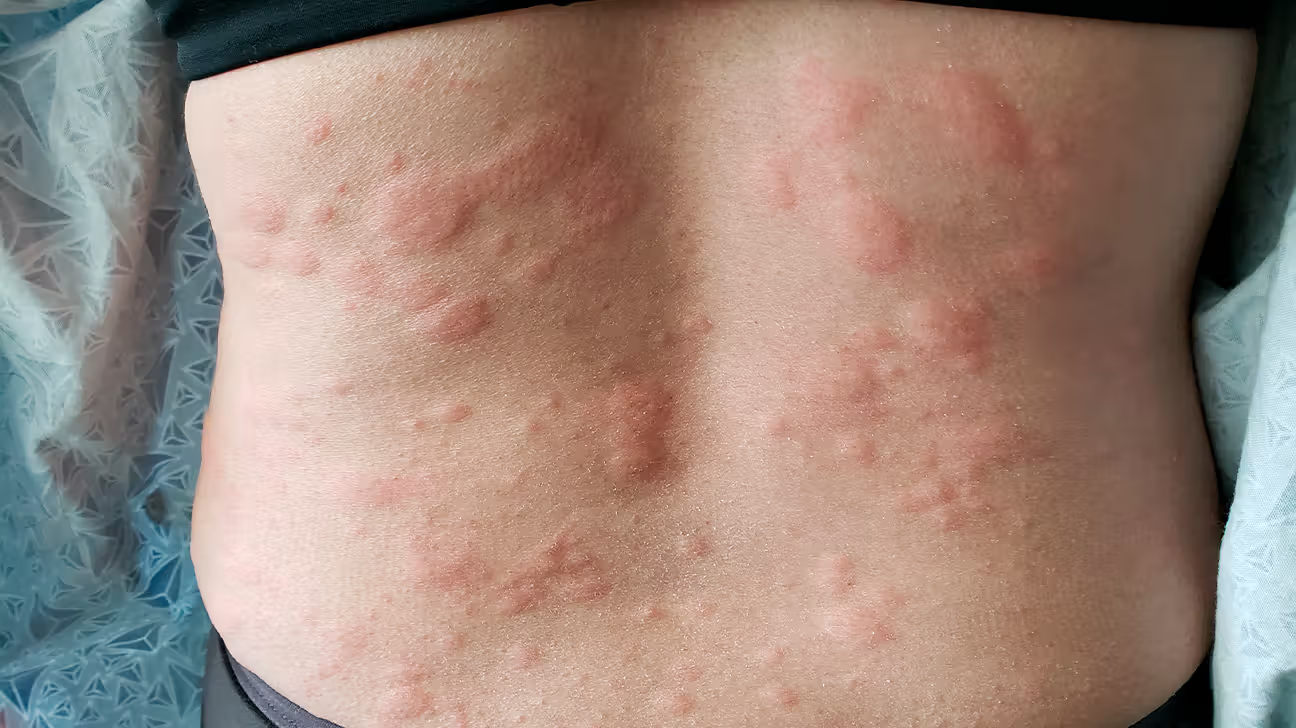
Urticaria, or hives, causes itchy raised swellings called wheals. Individual wheals usually fade within 24 hours, while new ones can appear elsewhere. Hives may occur with deeper swelling called angioedema. Many episodes do not have a single identifiable food allergy, so the pattern and accompanying symptoms matter.
Common symptoms
- Raised itchy patches that change shape or location.
- Skin-coloured, pink or red swellings, sometimes less visibly red on darker skin.
- Occasional swelling around the eyelids or lips.
Causes and contributing factors
Hives can follow infections, medicines, foods or physical triggers such as pressure, heat or cold. In chronic spontaneous urticaria, symptoms recur for more than six weeks and often have no clear external trigger. Broad food restrictions and repeated allergy panels are not automatically helpful.
How the condition is assessed
Photographs taken during an episode can help because the wheals may disappear before the appointment. A clinician reviews their duration, possible triggers, medicines and any swelling or breathing symptoms. A patch that stays fixed, bruises or hurts needs assessment for other causes.
Care and treatment considerations
Avoid a confirmed trigger where practical, and use cool surroundings and loose clothing for comfort. A clinician may recommend an appropriate antihistamine and follow-up plan. Do not stop prescribed medicines or start prolonged restrictive diets without professional advice.
When to seek medical help
Breathing difficulty, throat or tongue swelling, collapse or rapidly worsening symptoms require emergency care, not a routine skin appointment. Arrange a review for recurring hives or lesions that remain in one place for more than a day.
Patient questions
Are all hives caused by food allergy?
No. Infection, medicines, physical triggers and spontaneous inflammation can also cause hives. Testing is guided by a convincing history rather than done indiscriminately.
Can I pass hives to my family?
Hives themselves are not contagious. If an infection triggered them, that infection may have its own precautions.
Dermatology consultation in Birgunj
For an individual skin assessment, request a consultation with Dr. Rohit Gupta at the dermatology clinic in Birgunj. View appointment options. Use urgent or emergency services for the warning signs described above; do not wait for a routine appointment.
Reference and medical information notice
Further reading: DermNet: Urticaria (Hives). The reference is independent of the clinic; linking does not imply endorsement or review by DermNet.
This original educational summary does not diagnose a rash or replace personal medical advice. No clinician review, treatment guarantee or direct quotation from Dr. Rohit Gupta is claimed.