Draft for clinical review: this educational text and illustration require clinician approval before publication.
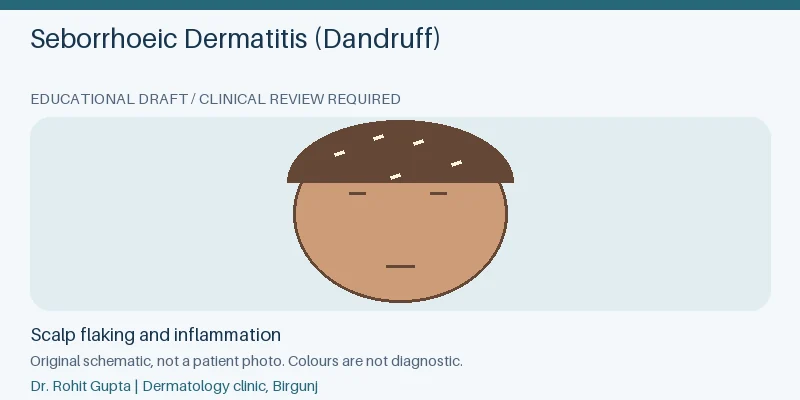
Image: Scalp flaking and inflammation. Original schematic illustration, not a patient photograph. Colours and shapes are simplified and are not diagnostic.
Understanding Seborrhoeic Dermatitis (Dandruff)
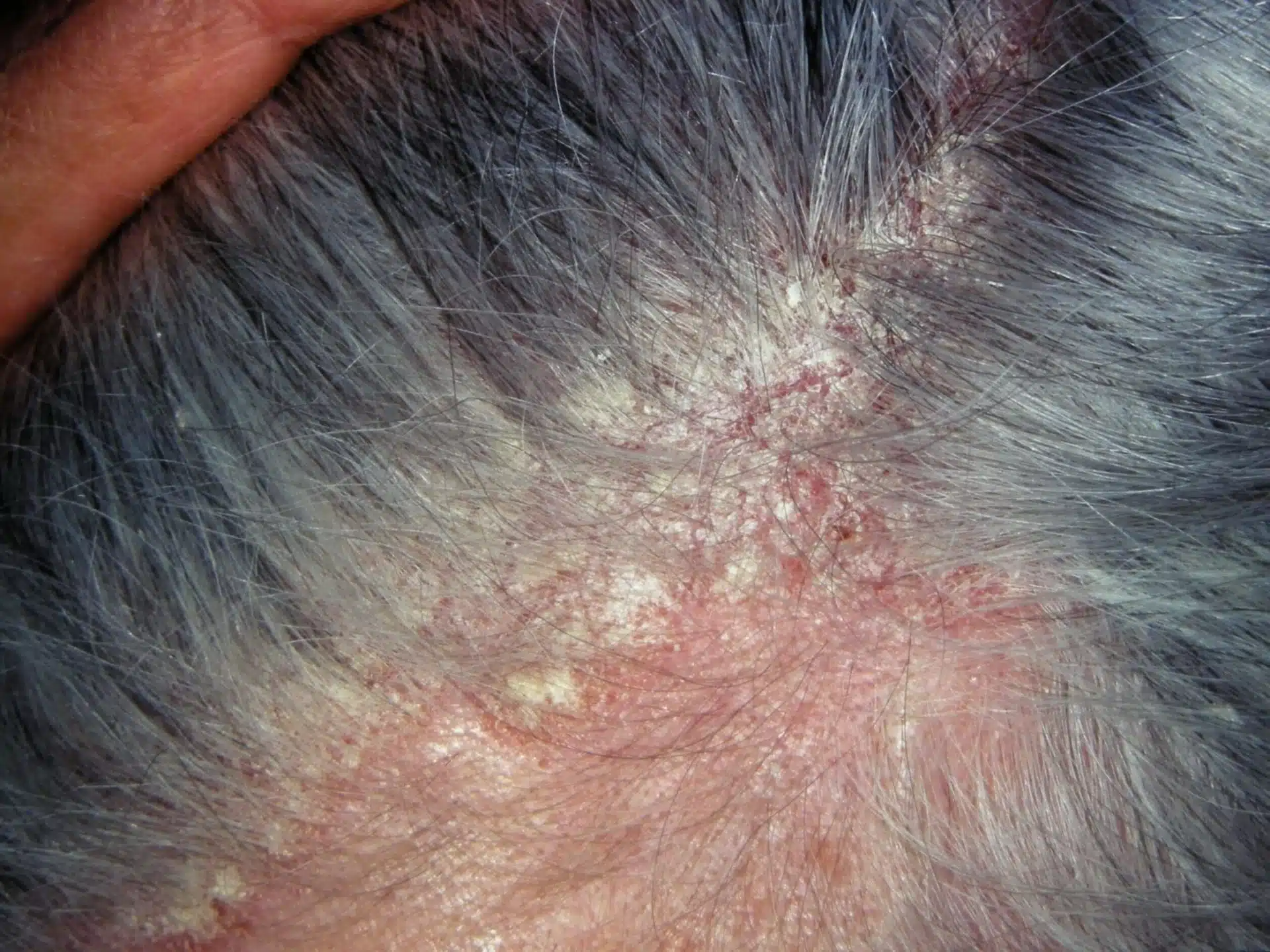
Seborrhoeic dermatitis is a recurring inflammatory skin condition affecting oily areas such as the scalp, eyebrows, sides of the nose and chest. It can cause flaking, itching and discoloured patches. Dandruff is a milder scalp form. It is not caused simply by poor hygiene and is not passed between people.
Common symptoms
- Loose or greasy-looking scalp flakes with itching.
- Scaly patches around the eyebrows, ears or sides of the nose.
- Pink, red, lighter or darker affected skin, depending on skin tone.
Causes and contributing factors
The condition involves an inflammatory response associated with skin oils and Malassezia yeast, which normally lives on skin. Stress, illness and changes in weather may accompany flares. Persistent scaling can also have other causes, including psoriasis or contact dermatitis.
How the condition is assessed
A clinician examines the scalp and affected skin and asks about products, medicines and previous episodes. Thick crusting, patchy hair loss or a rash that does not respond as expected may need a different diagnosis rather than another anti-dandruff product.
Care and treatment considerations
Gentle washing and a consistent scalp-care routine may help. A clinician may recommend an appropriate medicated shampoo or a topical treatment for inflammation. Facial and scalp skin need different product choices; do not apply a strong steroid or mixed antifungal-steroid cream without advice.
When to seek medical help
Arrange an assessment for persistent symptoms, patchy hair loss, painful skin or discharge. Seek prompt care for spreading redness with fever. An infant with widespread rash, poor feeding or illness needs paediatric assessment.
Patient questions
Can dandruff come back after treatment?
Yes. Seborrhoeic dermatitis commonly relapses. A maintenance routine may be needed, and the plan should be adjusted if the diagnosis or response is uncertain.
Does dandruff mean I am not washing enough?
No. Washing habits can affect visible scale, but seborrhoeic dermatitis is an inflammatory condition rather than evidence of poor cleanliness.
Dermatology consultation in Birgunj
For an individual skin assessment, request a consultation with Dr. Rohit Gupta at the dermatology clinic in Birgunj. View appointment options. Use urgent or emergency services for the warning signs described above; do not wait for a routine appointment.
Reference and medical information notice
Further reading: DermNet: Seborrhoeic Dermatitis (Dandruff). The reference is independent of the clinic; linking does not imply endorsement or review by DermNet.
This original educational summary does not diagnose a rash or replace personal medical advice. No clinician review, treatment guarantee or direct quotation from Dr. Rohit Gupta is claimed.