Draft for clinical review: this educational text and illustration require clinician approval before publication.
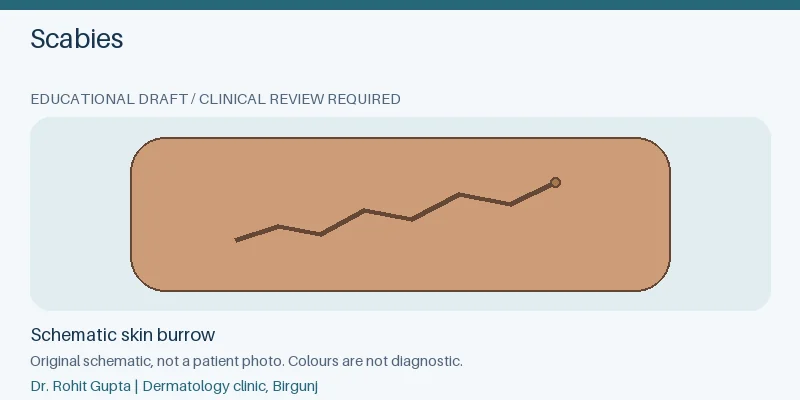
Image: Schematic skin burrow. Original schematic illustration, not a patient photograph. Colours and shapes are simplified and are not diagnostic.
Understanding Scabies
Scabies is an itchy skin infestation caused by a microscopic mite. It usually spreads through prolonged skin-to-skin contact and can affect anyone, regardless of cleanliness. Night-time itching and several close contacts becoming itchy are useful clues, but examination is needed because eczema and other rashes can look similar.
Common symptoms
- Intense itching, often worse at night.
- Small bumps or fine burrow-like tracks, commonly around finger webs and wrists.
- Different distributions in infants, older people or people with weakened immunity.
Causes and contributing factors
The itch is an immune reaction to the mite and its products. Symptoms can take weeks to appear after a first infestation, so a person may spread scabies before recognising it. Crusted scabies is a more infectious form needing specialist management.
How the condition is assessed
A clinician checks the rash and contact history; dermoscopy or skin sampling may help when the diagnosis is uncertain. Tell the clinician about babies, pregnancy and immune-suppressing illness or medicines so treatment can be selected safely.
Care and treatment considerations
Effective care usually requires a scabies-specific medicine, coordinated treatment of relevant close contacts and clear instructions about clothing and bedding. Do not substitute household insecticide, kerosene or harsh disinfectant on skin. Itching can persist after successful treatment and needs reassessment if new lesions keep appearing.
When to seek medical help
Seek prompt care for thick crusting, a widespread rash in someone with weakened immunity, or sores with increasing pain, pus or fever. Infants need age-appropriate assessment and treatment.
Patient questions
Must everyone at home be itchy before getting advice?
No. Close contacts may have no symptoms initially. A clinician should explain who needs coordinated treatment and when.
Does continued itching prove treatment failed?
Not necessarily. Inflammation can persist, but new burrows, new bumps or untreated contacts can indicate ongoing infestation or reinfection.
Dermatology consultation in Birgunj
For an individual skin assessment, request a consultation with Dr. Rohit Gupta at the dermatology clinic in Birgunj. View appointment options. Use urgent or emergency services for the warning signs described above; do not wait for a routine appointment.
Reference and medical information notice
Further reading: DermNet: Scabies. The reference is independent of the clinic; linking does not imply endorsement or review by DermNet.
This original educational summary does not diagnose a rash or replace personal medical advice. No clinician review, treatment guarantee or direct quotation from Dr. Rohit Gupta is claimed.