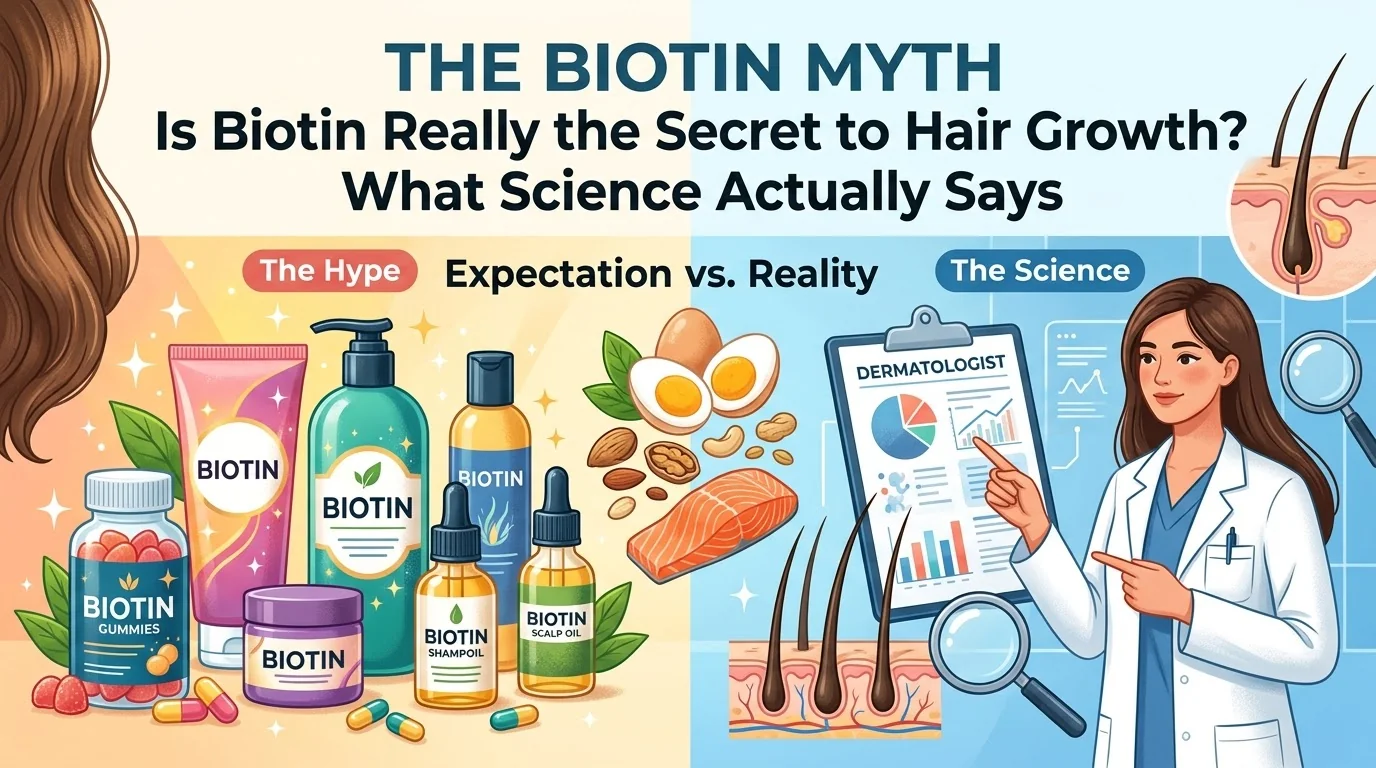
Walk down any beauty or health aisle, and you will spot biotin everywhere. It is in chewy gummies, daily pills, thickening shampoos, and scalp oils, all promising to fix thinning hair fast.
People spend billions of dollars on these products every year. But dermatologists and clinical studies share a very different story: biotin does not help hair loss for most people.
Here is why the trend became so popular, why it usually does not work, and what actually helps hair grow back.
1. What Is Biotin, Anyway?
Biotin is just vitamin B7. It is a natural nutrient your body uses to turn food into daily energy.
How much you need: Most adults need only 30 micrograms a day.
Where you get it: Everyday foods like eggs, fish, nuts, seeds, and leafy greens easily give you all you need.
Because ordinary meals supply plenty of it, genuine biotin deficiency is extremely rare.
2. Does Extra Biotin Regrow Hair?
For most people, no.
In clinical studies comparing women taking high daily doses of biotin against women taking a dummy pill (placebo), both groups had the exact same results. The extra biotin did not stop shedding or speed up new growth.
Do Biotin Shampoos and Oils Help?
Putting it on your scalp does not work either. If your body already gets enough biotin from food, hair follicles cannot absorb or use extra biotin from a wash or a serum.
3. Why Do So Many People Think It Worked?
It usually comes down to good timing and a temporary kind of hair shedding called telogen effluvium.
The Sudden Trigger: A major stress, high fever, illness, crash diet, or surgery shocks the body.
The Delayed Shed: About 2 to 4 months later, hair starts falling out in clumps in the shower or brush.
The Panic Buy: People panic and immediately start taking biotin pills.
Natural Recovery: Over the next 3 to 6 months, the body recovers on its own. Hair follicles wake up and start growing naturally again.
The Mix-up: When the hair returns, people give all the credit to the biotin pills—even though their hair would have grown back without them!
4. Are There Rare Cases Where Biotin Actually Helps?
Yes, but only in very unusual situations:
People born with a rare genetic disorder that stops their body from processing biotin.
A rare condition called "uncombable hair syndrome."
A doctor-confirmed lack of biotin in your blood.
If you do not have one of these rare conditions, extra biotin simply washes out of your body when you use the restroom.
5. What Actually Works for Thinning Hair?
If your hair is noticeably thinning or shedding for months, dermatologists recommend treatments proven by solid research:
Minoxidil: An easy-to-find medicine (used as a liquid, foam, or low-dose pill) that stimulates roots and keeps hair in the growth phase longer.
Red Light Therapy: Safe light caps or combs that wake up sluggish hair roots.
Treating Scalp Inflammation: Conditions like patchy hair loss (alopecia areata) or scarring hair loss need prescription creams or shots to calm down irritation.
Fixing Real Nutritional Deficits: Blood tests can check if you are low in iron, zinc, or vitamin D, and eating enough protein gives hair the building blocks it needs.
The Big Takeaway
Skip the overpriced biotin gummies and special shampoos. If your hair is steadily thinning or your scalp is showing more than usual, see a dermatologist. A quick check-up can pinpoint the real cause—whether it is genetics, hormones, or stress—and get you real results much faster.