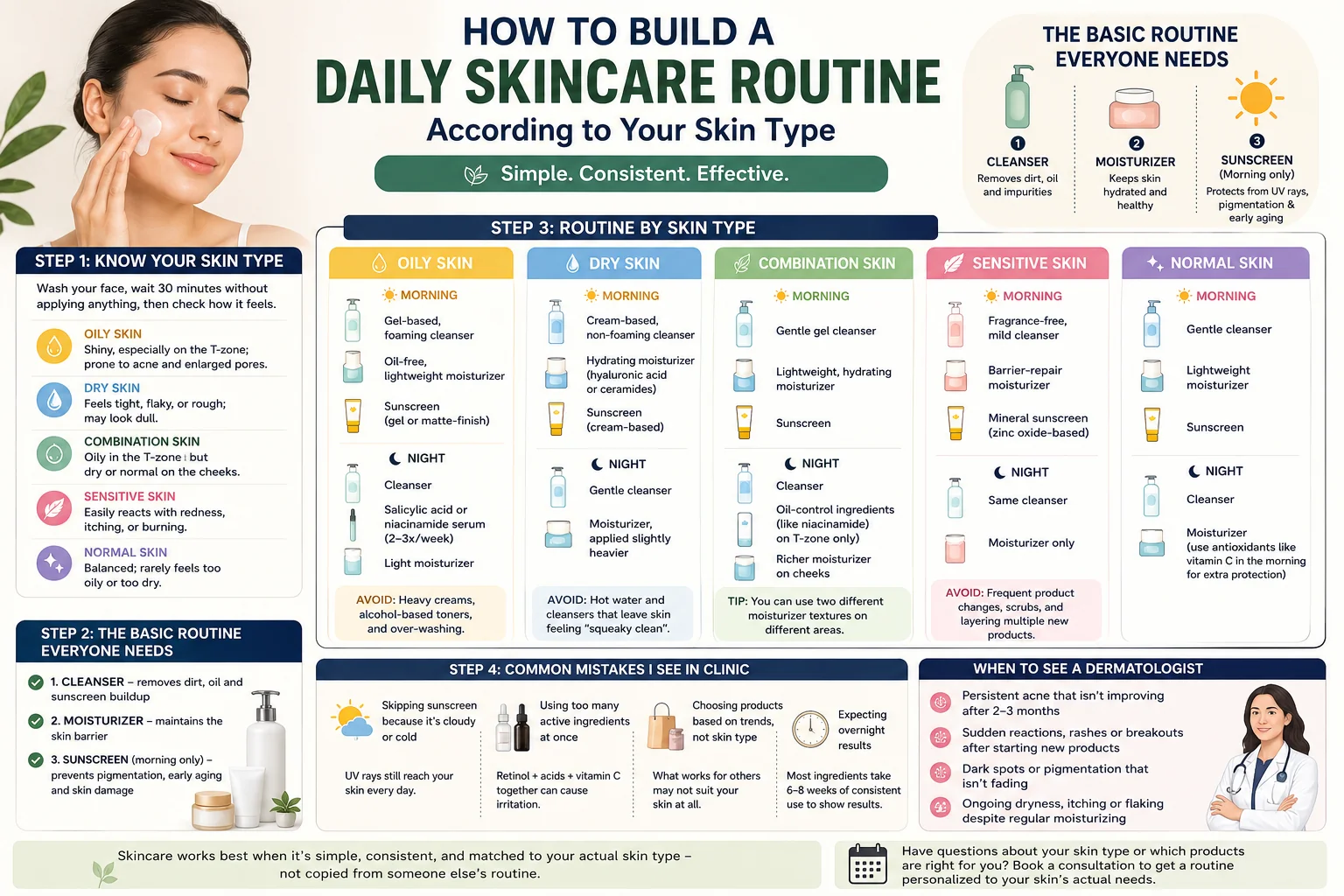
A dermatologist's guide to simple, effective skincare — whether your skin is oily, dry, combination, or sensitive.
Most people don't have a "bad skin" problem — they have a wrong routine problem. Using the wrong cleanser, skipping moisturizer because skin feels oily, or piling on five serums at once can do more harm than good.
As a dermatologist, one of the most common questions I hear is: "Doctor, what skincare routine should I actually follow?" The honest answer is: it depends on your skin type. A routine that works beautifully for dry skin can trigger breakouts in oily skin, and a routine built for acne-prone skin can leave dry skin more irritated.
This guide breaks down a simple, science-backed daily routine for each skin type — no 10-step routines, no unnecessary products.
Step 1: Know Your Skin Type
Before buying anything, figure out which category you fall into. A simple way to test: wash your face, wait 30 minutes without applying anything, then check how it feels.
- Oily skin – Shiny, especially on the forehead, nose, and chin (T-zone); prone to acne and enlarged pores.
- Dry skin – Feels tight, flaky, or rough; may look dull.
- Combination skin – Oily in the T-zone but dry or normal on the cheeks.
- Sensitive skin – Easily reacts with redness, itching, or burning to new products or weather changes.
- Normal skin – Balanced; rarely feels too oily or too dry.
Step 2: The Basic Routine Everyone Needs
Regardless of skin type, every routine should have three non-negotiable steps:
- Cleanser – removes dirt, oil, and sunscreen buildup
- Moisturizer – maintains the skin barrier
- Sunscreen (morning only) – prevents pigmentation, early aging, and skin damage
Everything else (serums, treatments, exfoliants) is optional and should be added based on your specific skin concern — not because it's trending on social media.
Step 3: Routine by Skin Type
🟡 Oily Skin
Goal: Control excess oil without stripping the skin, which can actually trigger more oil production.
- Morning: Gel-based, foaming cleanser → oil-free, lightweight moisturizer → sunscreen (gel or matte-finish)
- Night: Cleanser → salicylic acid or niacinamide serum (2–3x/week) → light moisturizer
Avoid: Heavy creams, alcohol-based toners, and over-washing (twice a day is enough — more can worsen oiliness).
🔵 Dry Skin
Goal: Repair and lock in moisture.
- Morning: Cream-based, non-foaming cleanser → hydrating moisturizer (look for hyaluronic acid or ceramides) → sunscreen (cream-based)
- Night: Gentle cleanser → moisturizer, applied slightly heavier than daytime
Avoid: Hot water while washing your face, and cleansers that leave skin feeling "squeaky clean" — that usually means the barrier has been stripped.
🟢 Combination Skin
Goal: Balance both zones without over-treating either one.
- Morning: Gentle gel cleanser → lightweight, hydrating moisturizer → sunscreen
- Night: Cleanser → apply oil-control ingredients (like niacinamide) only on the T-zone, and a slightly richer moisturizer on the cheeks
Tip: You can use two different moisturizer textures on different areas of the face — this is completely normal and often more effective than a one-size-fits-all product.
🔴 Sensitive Skin
Goal: Minimize irritation and strengthen the skin barrier.
- Morning: Fragrance-free, mild cleanser → barrier-repair moisturizer → mineral sunscreen (zinc oxide-based, less likely to irritate)
- Night: Same cleanser → moisturizer only (avoid active ingredients unless prescribed)
Avoid: Frequent product changes, physical scrubs, and layering multiple new products at once. Introduce one new product at a time and wait 1–2 weeks before adding another.
⚪ Normal Skin
Goal: Maintain balance and protect long-term skin health.
- Morning: Gentle cleanser → lightweight moisturizer → sunscreen
- Night: Cleanser → moisturizer (can include antioxidants like vitamin C in the morning routine for added protection)
Step 4: Common Mistakes I See in Clinic
- Skipping sunscreen because it's cloudy or cold — UV rays still reach the skin even on overcast days or in cooler cities like Kathmandu.
- Using too many active ingredients at once (retinol + acids + vitamin C together) — this often causes irritation rather than better results.
- Choosing products based on trends, not skin type — what works for someone on social media may not suit your skin at all.
- Expecting overnight results — most skincare ingredients take 6–8 weeks of consistent use to show visible improvement.
When to See a Dermatologist
A basic routine works well for maintenance, but you should consult a dermatologist if you notice:
- Persistent acne that isn't improving after 2–3 months of consistent care
- Sudden reactions, rashes, or breakouts after starting new products
- Dark spots or pigmentation that isn't fading
- Ongoing dryness, itching, or flaking despite regular moisturizing
Skincare works best when it's simple, consistent, and matched to your actual skin type — not copied from someone else's routine.
Have questions about your skin type or which products are right for you? Book a consultation to get a routine personalized to your skin's actual needs.