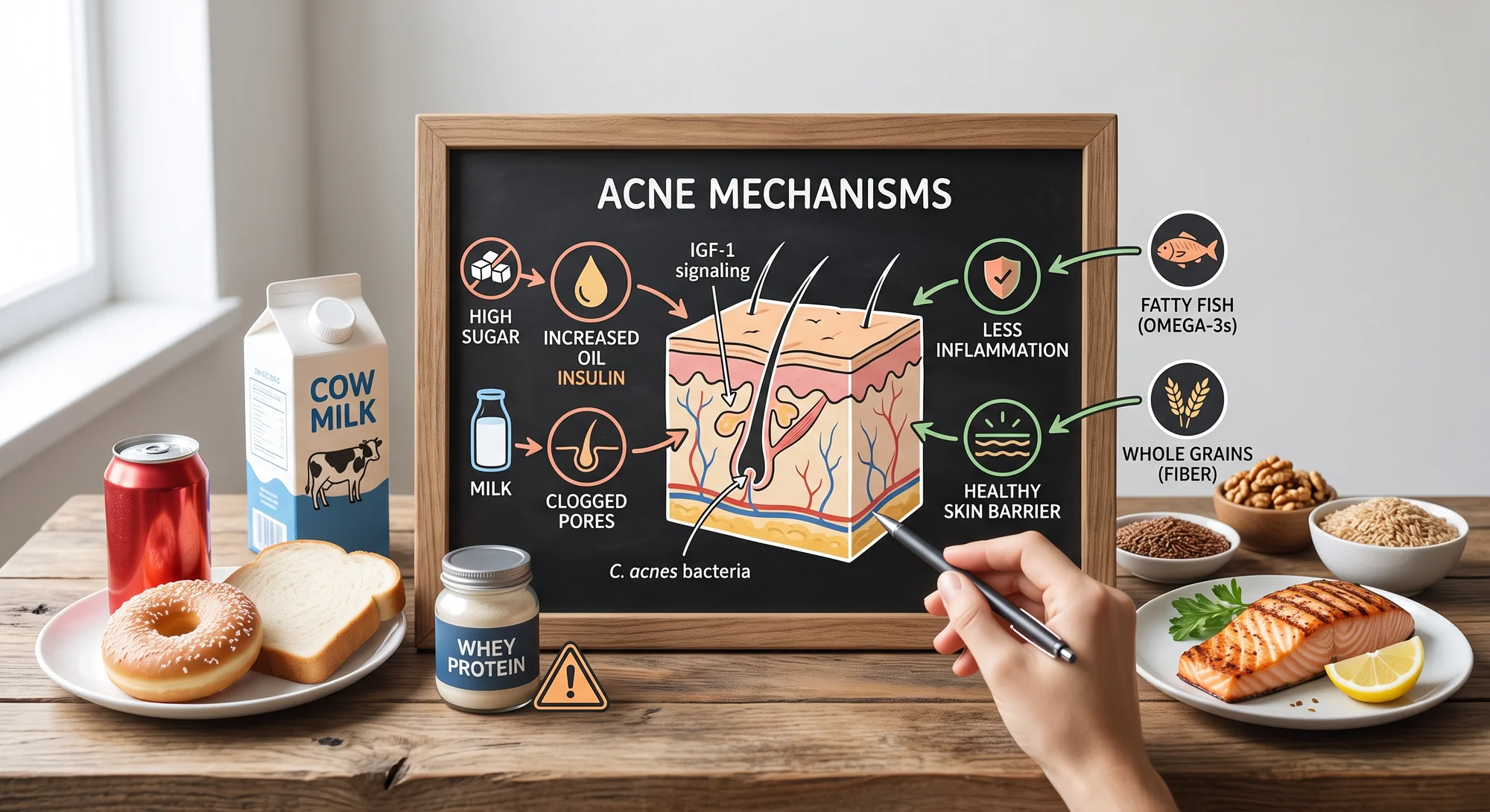
Acne develops when oil glands overproduce sebum, pores clog with dead skin cells, bacteria (C. acnes) multiply, and inflammation sets in. Certain foods affect this process by raising hormones—particularly insulin and insulin-like growth factor-1 (IGF-1)—which directly trigger excess oil and skin cell growth.
What to Limit
-
High-Glycemic Foods (Sugar & Refined Carbs): White bread, soda, pastries, and sweets cause sharp blood sugar and insulin spikes that elevate IGF-1 and worsen breakouts. Replacing these with whole grains and vegetables shows the most consistent scientific evidence for improving skin.
-
Cow’s Milk: Both whole and low-fat milk contain hormones and amino acids that stimulate oil glands. The effect varies by individual and diet, but cutting back on fluid milk can help persistent acne.
-
Whey Protein Powder: A distinct trigger often found in bodybuilding supplements. It can cause sudden, severe breakouts across the back, chest, and shoulders, which typically clear up after stopping the powder.
-
Processed Snacks & Confectionery: Highly processed snacks and chocolate contribute to systemic inflammation and insulin spikes, though cocoa itself is not fully proven as a standalone culprit.
What to Add
-
Omega-3 Fatty Acids: Found in fatty fish (salmon, sardines), flaxseed, and walnuts, omega-3s reduce inflammation and IGF-1. Most acne patients have low omega-3 levels, and supplementing has been shown to reduce both red pimples and blackheads/whiteheads.
-
Dietary Fiber & Whole Foods: High-fiber foods nourish the gut microbiome and help keep blood sugar steady, aiding systemic skin health.
Evidence Summary
| Food Category | Practical Advice |
| Refined Sugar & High-GI Carbs | Switch to oats, legumes, brown rice, and vegetables. |
| Cow's Milk | Trial cutting back for a few weeks if acne resists treatment. |
| Whey Protein | Discontinue or switch to plant-based powders if trunk acne flares. |
| Omega-3 Fats | Eat fatty fish twice a week or add flaxseed/walnuts to meals. |
| Processed Snacks | Moderate intake for overall health and lower inflammation. |
Diet alone will not cure moderate or severe acne—genetics and hormones remain the primary drivers. Official clinical guidelines treat diet as a helpful supporting habit alongside standard treatments like benzoyl peroxide, retinoids, or prescription medications.